◇ Click here for Japanese.
※This article was originally released in Japanese on September 4, 2026.
Astronomical Nano-Satellite VERTECS Completes Initial
Operations and Begins Scientific Observations
~ First Images Captured from Space Released ~
A research team from the Kyushu Institute of Technology, Kwansei Gakuin University, Tokyo City University, Kanazawa University, the University of Tokyo, and other institutions has successfully completed the test operations conducted since the satellite was released into orbit. Having confirmed that the satellite meets its specified performance requirements, the team has begun routine operations for scientific astronomical observations.
The astronomical nano-satellite VERTECS was launched from the Tanegashima Space Center at 9:53:59 a.m. Japan Standard Time on June 12, 2026, aboard H3 Launch Vehicle No. 6 (H3-30 test vehicle). After insertion into its designated orbit, the satellite successfully communicated with its operational ground stations. The team then sequentially verified the satellite's power, communications, attitude control, data-processing, and observation-system functions.
During initial operations, the team pointed the satellite toward selected regions of the sky, imaged astronomical objects with its onboard visible-light instrument, and transmitted the acquired observation data to the ground. These operations confirmed that both the satellite system and the observation instrument achieve their specified on-orbit performance and can conduct routine astronomical observations.
During routine operations, VERTECS will begin its primary mission: observing visible extragalactic background radiation to reveal the history of star and galaxy formation in the universe. Members of the participating institutions are operating the satellite, and operations and observations are planned to continue for a year.
We extend our sincere gratitude to everyone who contributed to and supported the satellite's development, launch, and initial operations. Selected images acquired during initial operations are presented below.
■ Initial Observation Images Acquired by VERTECS
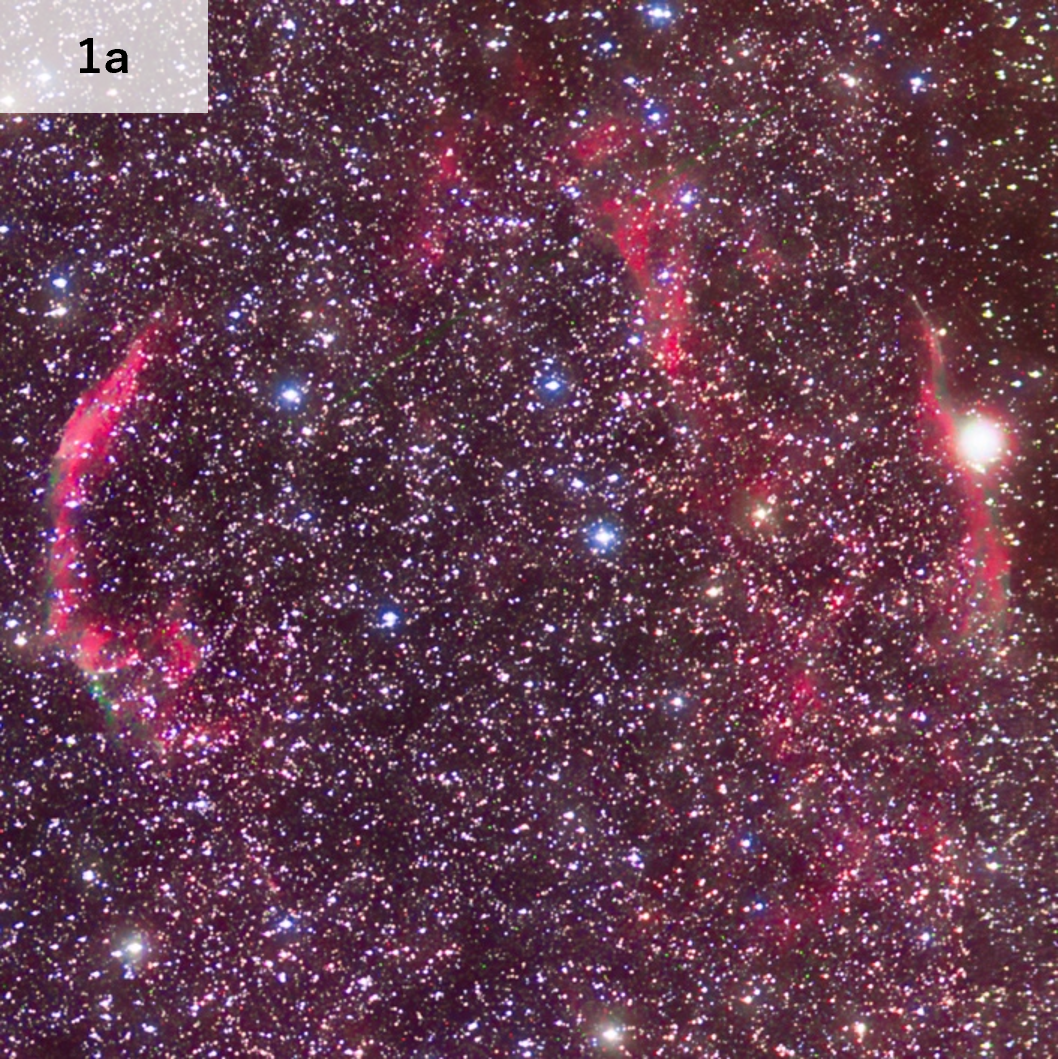
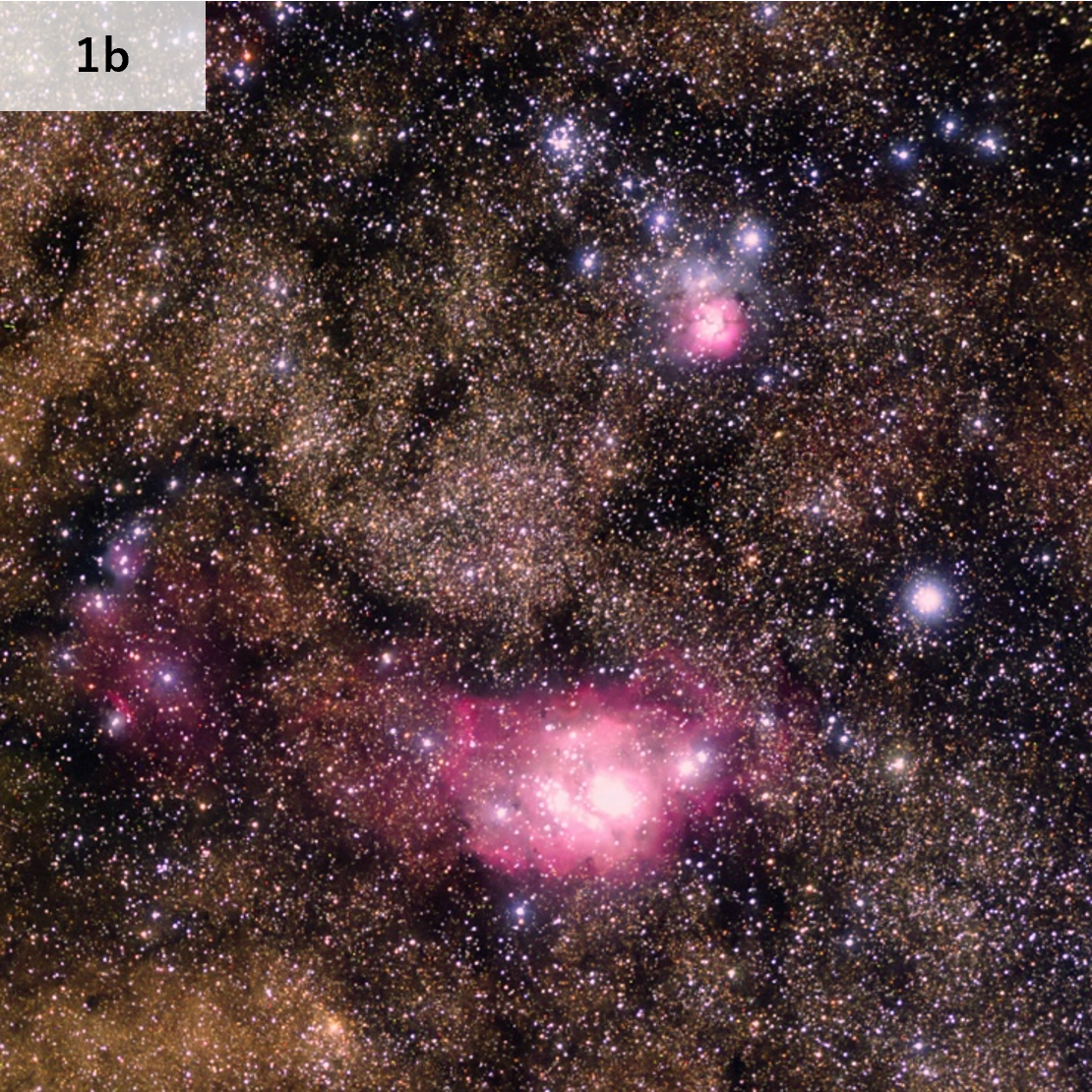
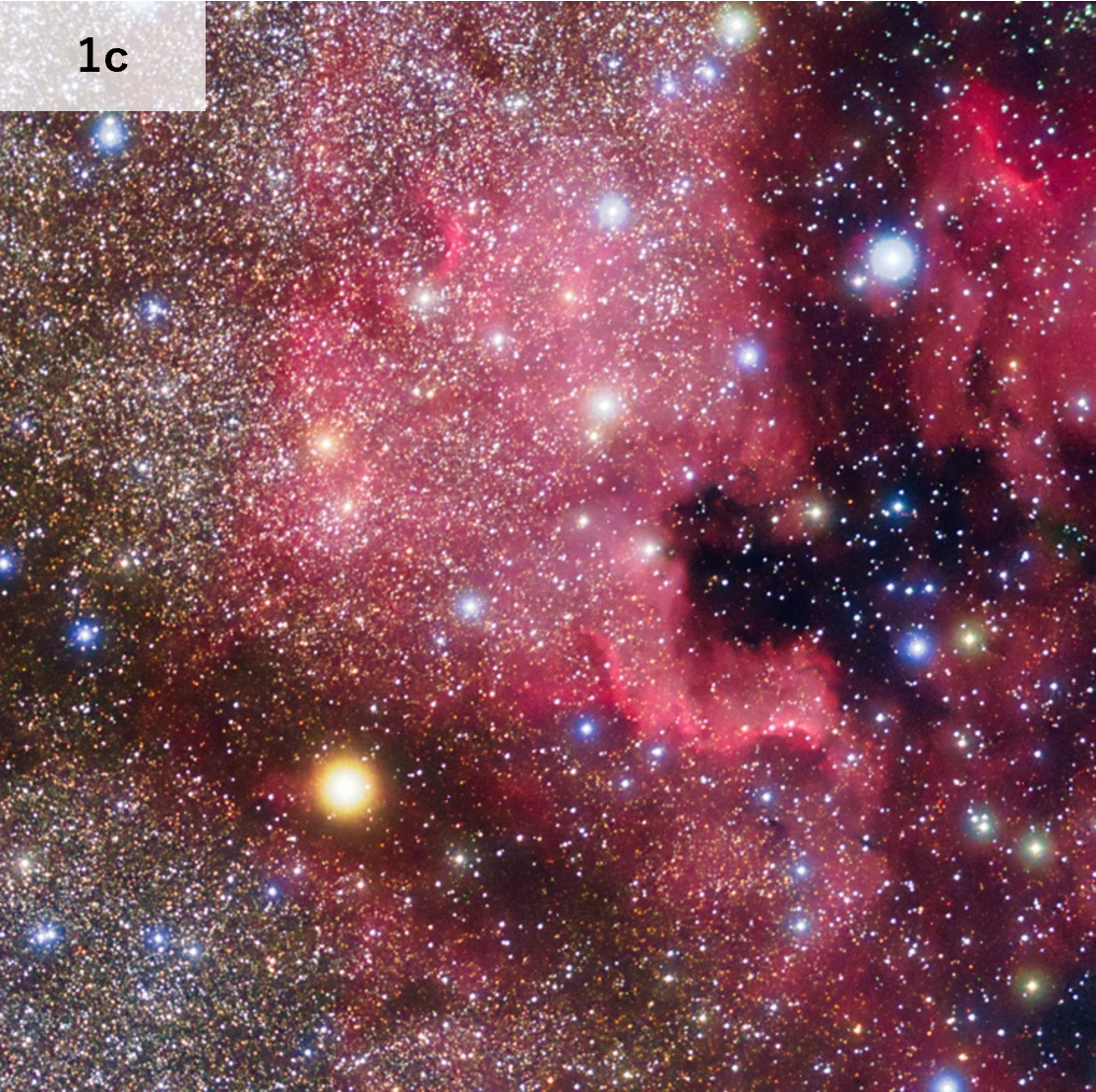
Figure 1. Multicolor composite images of the Cygnus Loop (a), Lagoon Nebula (b), and North America Nebula (c), acquired with the visible-light observation instrument aboard VERTECS. Brightness and contrast have been adjusted to make the astronomical objects easier to see. (Credit: VERTECS Project)
Figure 1 shows images acquired as VERTECS observed each target region of the sky. The images primarily capture stars and nebulae. By pointing at the intended regions and conducting observations, VERTECS demonstrated its high-precision attitude-control capability. The satellite obtained sharp images with one-minute exposures that would require several hours of exposure using ground-based telescopes.

Figure 2. Multicolor composite image of the Boötes region acquired by VERTECS and a comparison of the fields of view of the James Webb Space Telescope and the Euclid satellite. (Credit: VERTECS Project)
Figure 2 shows the Boötes region, which was selected for observations of visible extragalactic background radiation because it contains no bright astronomical objects. The field of view of VERTECS's main camera is 3 degrees by 3 degrees in each wavelength band, allowing a single observation to cover an area about 40 times the apparent area of the full Moon. Existing space telescopes such as the James Webb Space Telescope and Euclid require many observations to image such a wide field. Analysis of this image confirmed that VERTECS achieves its specified resolution and sensitivity.
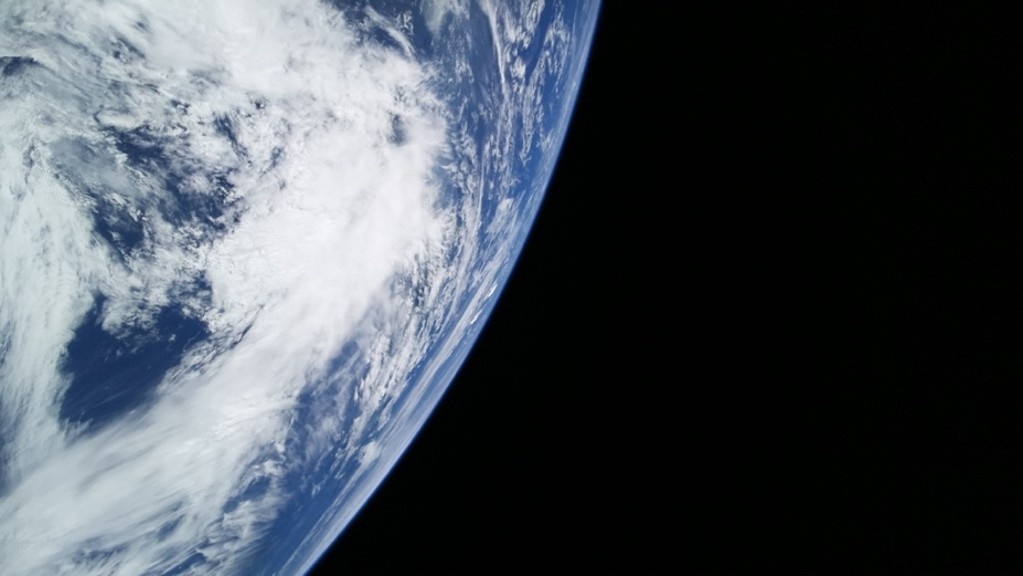
Figure 3. Image of Earth acquired by VERTECS. (Credit: VERTECS Project)
Figure 3 is an image of Earth captured by the secondary camera aboard VERTECS. When communicating with an operational ground station, VERTECS must maintain an attitude that points its antenna toward the station on Earth. The image confirms that the satellite maintained a stable attitude while communicating with the ground station. A video recorded during the Earth imaging sequence is available at https://www.kyutech.ac.jp/themes/vertecs/vertecs260904.mp4.
■ Comments from Representatives of Participating Institutions
1. Kyushu Institute of Technology (Lead Institution)
Kei Sano, Assistant Professor, Department of Space Systems Engineering, Faculty of Engineering
VERTECS has completed its initial operations and functional checks of each onboard system and has now begun routine observations. The initial images mark an important first step, demonstrating that the satellite can achieve its specified observational performance in space. I sincerely thank the partner institutions and all the students, researchers, and engineers who have supported the project and devoted themselves to its development and operation. We will now steadily accumulate and analyze observation data with the aim of producing new scientific results.
2. Kwansei Gakuin University
Shuji Matsuura, Professor, Department of Physics and Astronomy, School of Science
As the team primarily responsible for developing the observation instrument, we are relieved to have confirmed that its on-orbit operation and performance match our ground tests and simulations. We are also deeply impressed by the beauty of the astronomical images obtained with this small space telescope above Earth's atmosphere. Using the expansive map of the universe that will be built through long-term observations, our research team will take on the challenge of unraveling the mystery of the extragalactic background radiation.
3. Tokyo City University
Takao Nakagawa, Specially Appointed Professor, Advanced Research Laboratories
I am delighted that VERTECS is performing as expected, and I look forward to seeing the data from the full-scale observations ahead. The Tokyo City University team will continue contributing to the VERTECS Project in multiple areas, including satellite operations, data reception, and analysis.
4. Kanazawa University
Ichiro Jikuya, Associate Professor, Faculty of Frontier Engineering / Advanced Research Center for Space Science and Technology
I participated in the introduction of the attitude-control unit for the VERTECS Project. With the successful completion of initial operations and the establishment of high-precision attitude control that enables the telescope to realize its full performance, development of the satellite bus has reached a major milestone. I hope this solid foundation will now support the mission payload and lead to outstanding scientific results, including a better understanding of extragalactic background radiation.
5. The University of Tokyo
Koji Takimoto, Project Researcher, Department of Aeronautics and Astronautics, Graduate School of Engineering
For VERTECS, I coordinated the onboard observation instrument and developed the telescope. Even as each satellite function was verified after launch, we remained anxious about whether the telescope would perform as expected in space until we saw the first image. That made the arrival of the sharp images especially rewarding. We will continue satellite operations and observations and work to turn them into new scientific results.
■ References
・About VERTECS
https://vertecs-project.com/(VERTECS website)
・Nano-Satellite VERTECS Successfully Inserted into Orbit and Establishes Communication with Operational Ground Stations
https://www.kyutech.ac.jp/whats-new/press/entry-12173.html (Kyushu Institute of Technology website)
https://www.kwansei.ac.jp/news/06416.html (Kwansei Gakuin University website)
https://www.tcu.ac.jp/news/all/20260617-72038/ (Tokyo City University website)
・Kyushu Institute of Technology Unveils Ultra-Small Satellite VERTECS
https://www.kyutech.ac.jp/whats-new/press/entry-12116.html (Kyushu Institute of Technology website)
・Kyushu Institute of Technology and JAXA Launch Nano-Satellite Development to Study the History of Astronomical Object Formation through Visible Extragalactic Background Radiation Observations
https://www.kyutech.ac.jp/whats-new/press/entry-9530.html (Kyushu Institute of Technology website)
◇Click here for the full press release
Contact:
■ Project Inquiries
Kyushu Institute of Technology
Department of Space Systems Engineering,
Faculty of Engineering
Assistant Professor, Kei Sano
Email: sano.kei288*mail.kyutech.jp
■ Media Inquiries
Kyushu Institute of Technology
Public Relations Section,
General Affairs Division
Email: pr-kouhou*jimu.kyutech.ac.jp
(Please replace“*”with“@”when sending an email.)